About OVAG

Supporting the Veterinarians Who Protect Orangutans

Established in 2009, the Orangutan Veterinary Advisory Group is a global network building capacity, community, and conservation impact across Borneo, Sumatra, and beyond.

 
Founded
0
Partner Organisations
0 +
Annual Workshops
0
Avg. Attendees/Year
0 +
Who We Are

An Orangutan Health Networking Opportunity

"OVAG brings together over 30 organizations — rehabilitation centres, conservation projects, universities, Government bodies, zoos, funders and supporters."

The OVAG network was established in 2009 in response to an urgent need for capacity building in wildlife health and management in Indonesia and Malaysia. The network empowers Indonesian and Malaysian wildlife health practitioners and academics to formulate plans relevant to all wildlife health management needs — plans that are respected and utilized by decision makers.

Orangutans are highlighted as a focus species as they are widely held and studied in Indonesia and Malaysia, and provide an excellent bridge species between wildlife and public health. The skills developed under the One Health concept also have much wider benefits for human and ecosystem health.

What We Do

Three Pillars of Impact

Professional Training

Free annual training for veterinarians and conservation managers at orangutan rescue and rehabilitation centers across Southeast Asia — hands-on, multilingual, and moderated by world-class experts.

Health Networking

Building lasting connections between veterinary sanctuary staff, healthcare workers, zoologists and professionals across Indonesia, Malaysia, and the international conservation community.

Government Advisory

Providing evidence-based statements on disease risks and welfare policy that are acted upon by conservation projects and Government alike — from Ebola protocols to euthanasia guidelines.

The Annual Workshop

Strengthening Conservation

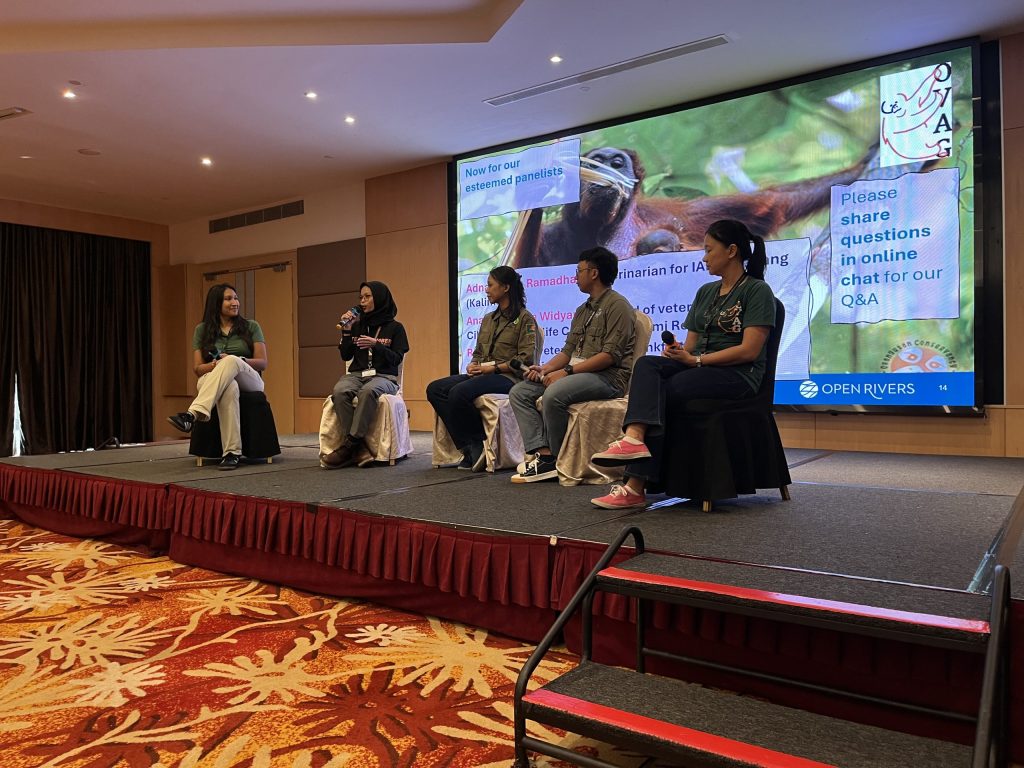
The centrepiece of OVAG’s capacity building is an annual five-day, intensive training workshop. Moderated by experts from around the world, it acts as a catalyst to build capacity of those working to improve orangutan health at sanctuaries, national parks, wildlife offices, zoos, universities, and communities.

Delegates benefit from new professional alliances and ongoing financial support for medications and equipment. Methods of training are tailored to the topic covered and the international, multilingual nature of the audience.

Hands-On Practice

Parasitology, CPR/emergency care, anesthesia and surgical techniques.

Interactive Presentations

Structured discussions that cement formal classroom concepts.

Multilingual Approach

Different approaches and languages to accommodate all backgrounds.

Professional Alliances

Networking that creates lasting partnerships and field resources.

DAYS 1-2

Theory & Lectures
Interactive presentations on disease outbreak management, disease risk analysis, and policy.

Days 3–4

Practical Application
Interactive presentations on disease outbreak management, disease risk analysis, and policy.

Days5

Evaluation & Planning
Extensive review and structured planning for the following year’s programme and priorities.
Advisory Role

Government & Academic Advisory

Statements from OVAG on Ebola, tuberculosis and hepatitis status in orangutans have been acted on by conservation projects and Government alike. A welfare and euthanasia policy has also been agreed on by all participants.

In 2017, OVAG became the official disease risk communication conduit for the orangutan Population and Habitat Viability Assessment (PHVA) — a landmark recognition of the network’s authority and credibility.

2015

Sarawak Forestry Department
Training on managing wildlife disease outbreaks in national parks — delivered at the annual OVAG workshop.

2015

Sabah Wildlife Department
Addressed biosecurity, human-wildlife conflict in Sepilok, and the EEHV crisis in wild elephant populations.

2016

SE Asian Zoos Association
Community biosecurity training and professional networking delivered through OVAG.

2017

Official PHVA Disease Conduit
OVAG named official disease risk communication conduit for the orangutan PHVA — a landmark milestone.
Long-Term Sustainability

Locally Driven. Globally Supported.

When Chester Zoo Animal Health staff and the Orangutan Conservancy began the OVAG initiative, it was recognised that for sustainability and maximum impact, this must be seen as a locally-driven programme.

Local Committee

Established in 2013, the committee comprises Indonesian and Malaysian vets and ecologists who have been core members of OVAG — engendering trust across a broad network.

Government Engagement

Managers, decision makers and Government officials are regularly invited to share knowledge and observe first-hand how OVAG has contributed to wildlife health management.

Academic Integration

INDOHUN (via UGM) and MyOHUN (via UPM) networks provide the capacity to expand OVAG-led material into postgraduate learning in perpetuity.

International University Partnership

A long-term partnership between UGM, Chester Zoo, Liverpool University and the Orangutan Conservancy facilitates engagement with universities and zoos internationally — sharing knowledge, exchanging veterinary staff, and further educational experiences on a much wider level.
The People Behind OVAG

OVAG Committee

Our committee is made up of dedicated veterinarians, scientists, and conservationists who coordinate the OVAG programme and ensure its impact is felt across the region.
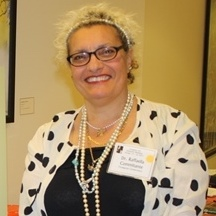
Raffaella Commitante, PhD
Committee Member
A core member of the OVAG committee, contributing expertise in wildlife health and conservation management across Southeast Asia.
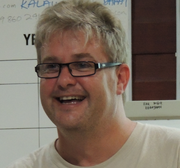
Dr. Steve Unwin
Committee Member
A founding contributor to the OVAG initiative with extensive experience in veterinary medicine and orangutan conservation programmes.

How You Can Get Involved

Explore the latest updates from the field, workshop highlights, and insights from the orangutan conservation community.